Showing posts with label Holy Exploitation Batman. Show all posts

Sunday, November 22, 2009

Don't Deliver Us From Evil (1971)


Caution: Spoilers Galore


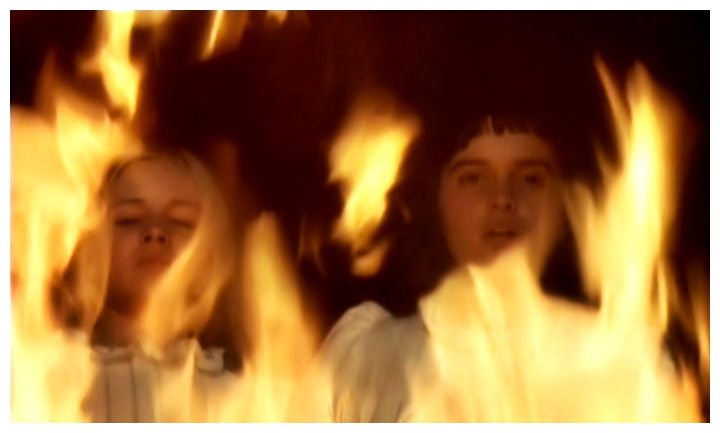
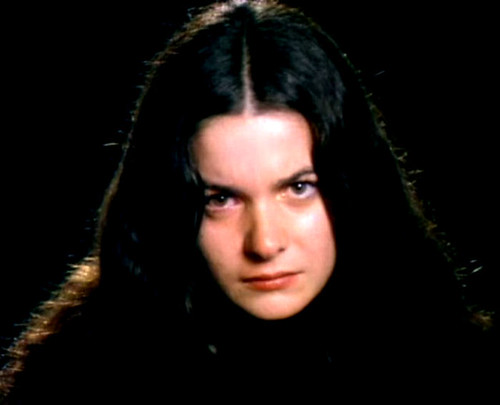
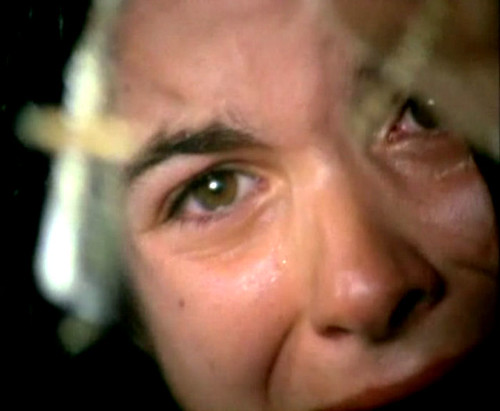
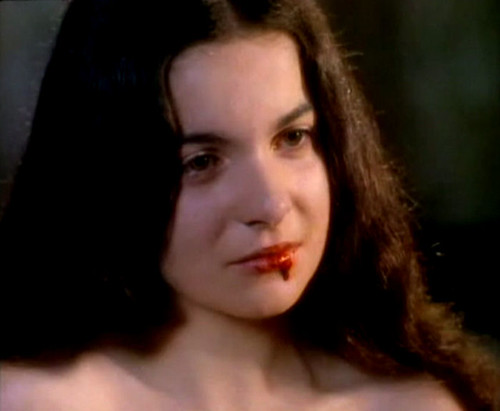
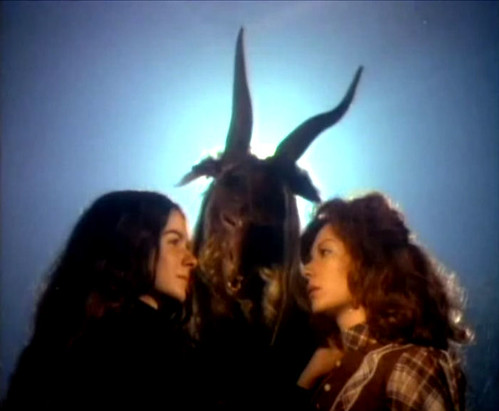
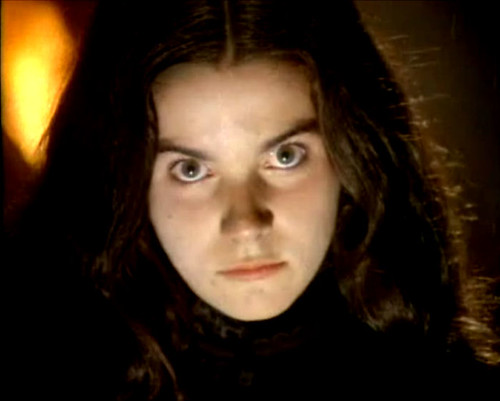
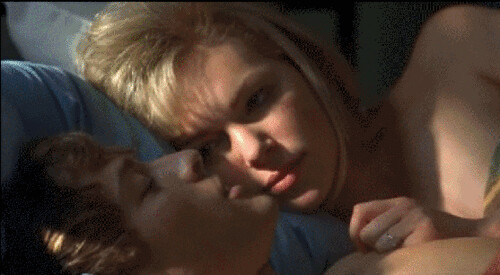
Shipped off to religious boarding school by parents who ignored them, budding young women Anne de Boissy (Jeanne Goupil) and Lore Fournier (Catherine Wagener) became the closest of friends. Each night while in the convent, they would secretly share Anne's bed to read steamy passages together underneath the sheets. They exploited every opportunity afforded them to do wrong. Things they liked to do for fun included breaking rules, mocking Christianity, torturing pets, composing dark literature, and leading men into temptation. Together, they were preparing a very special ceremony to renounce Christ, and commit their lives to doing evil.


"Lore and me get such pleasure when we do
something wrong. To sin has become our chief aim.
Let the other idiots live their lives doing good.
We shall dedicate our lives to Satan, our Lord and Master."


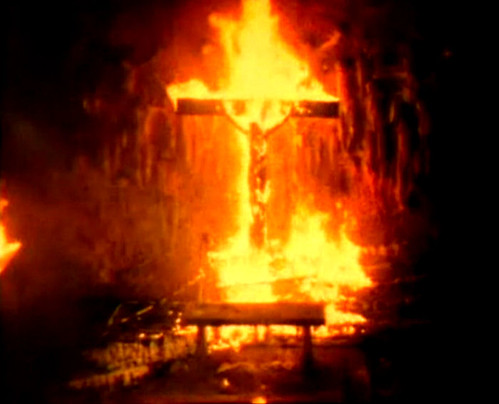
As one might expect, all Hell breaks loose when Anne's parents, the Count and Countess, go away for the summer, leaving Anne all alone in the chateau, but for a few servants. Satan's willing, young slaves use this time to engage in some of their favourite pastimes, like arson, and leading even more men into temptation.


The beautiful Lore uses her god-given attributes to drive unsuspecting gents into a state of mad lust. Ample servings of sleaze follow the girls through several uncomfortable encounters of coerced near-rape for the purposes of fulfilling their Satanic mantra. What truly shook the foundations of this particular viewer was the way in which the diabolical duo leaped from one dangerously evil venture to another with blatant disregard for even their own personal safety. Clearly, these young women were not merely playing at evil. They were ready to give their very lives for it.

Ultimately, their summer of reckless abandon catches up with them. Lore breaks down before her friend, admitting that she is afraid of being caught, imprisoned, and separated from Anne. The dark, exotic beauty reassures the delicate, sobbing blonde that they will never be parted.


"When this fleeting life is done,
we will be together forever."


Mais ne Nous Délivrez Pas du Mal (Don't Deliver Us from Evil) is a taut, sleazy horror drama from French writer/director Joël Séria, based loosely on the notoriously fatal friendship of Pauline Parker and Juliet Hulme. The pair made shocking headlines in 1954 when they murdered Parker's mother after making plans to escape to the United States to work together in literature and film. Parker and Hulme's bizarre escapades were detailed in the Academy Award-winning Peter Jackson film Heavenly Creatures.

Although the American Academy of Motion Picture Arts and Sciences has yet to recognize Séria's efforts in re-telling the story with a Satanic twist, Don't Deliver Us from Evil is a certified cult cinema classic, brought back to life (with subtitles!) by the good folks at Mondo Macabro. Many thanks to Karswell for contributing this titillating title to the Killer Kittens library!


5/5 Kitty Skulls = Pick of the litter!

Thursday, October 2, 2008

The Entity (1981)


Caution: Spoilers Galore


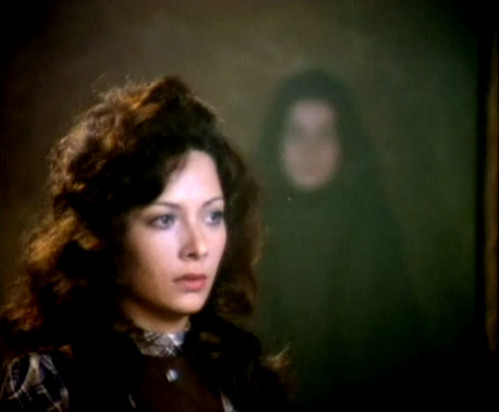
Carlotta Moran (played by Barbara Hershey) is a young, single mother trying to give her children a decent upbringing. The stylish brunette is shown leaving her clerical day job to attend typing school at night. She returns home to her two young girls (Natasha Ryan* and Melanie Gaffin), already asleep in their little beds, and finds her older son, Billy (David Labiosa), tinkering around in the garage. The close relationship between mother and son is instantly palpable: the way Carlotta speaks to Billy in such a relaxed and easy manner; the way she looks at him with such tender emotion in her eyes; and the way she sensuously caresses the back of his neck with her long, sinuous fingers… Waitaminnit -- neither of my parents ever touched me like that! If they had, I would have turned them in to Children's Aid.

Carlotta (Carla to her friends) leaves Billy in the garage, and enters her bedroom. Her head is suddenly thrown backward by some unseen force, leaving her mouth bloodied and her eyes wet. Her entire body is then heaved upward, and thrown down onto the bed. A pillow is pressed against her face to muffle the sounds of her screaming, as she is hammered into the mattress, over and over again, as though she were being raped. The musical score is urgent, and overbearing, while the camera settles in on Carlotta’s headboard rhythmically pounding the wall. The lamp shakes on the nightstand before finally falling over. Then silence returns, the pounding stops, and Carlotta screams hysterically on the bed.

The children come running to their mothers’ aid, and Carlotta orders Billy to look about the room, and then the entire house, for the person who had just attacked her. When the boy returns to report that nobody was, or could have been, inside with them, Carlotta’s terror mingles with confusion. Could a bad dream really leave you feeling sore?
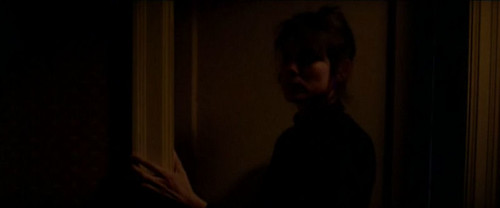


The following night, Carlotta is visibly on edge, as though she is waiting for something to happen. She picks up a book, feigning interest in it while she stretches out across her bed. A small tremor shakes the nightstand. A larger tremor shakes the bureau across from the bed. Soon, everything in the room is pulsating violently, coloured glass bottles of perfume are exploding, and Carlotta doesn’t wait around to see what else might happen. She flees from the room, scoops up her children, and loads them into the car. They spend the night with her friend, Cindy (Margaret Blye), and her bellyaching husband, George (Michael Alldredge), but young Billy does not seem convinced that their house is unsafe. The next morning, when Carlotta finally gets around to telling Cindy what had driven them out of their house, she receives even less emotional support.


“Carla, you’re one of the most stable people I know,
and you are definitely not insane. But when men who
aren’t actually there come into your room and have
intercourse with you, then it is time to see
a good psychiatrist.”


Carla returns to her house reluctantly with the children. She begins preparing for another night of terror when Cindy pops in to spend the night. Such a ray of sunshine, that Cindy! And not afraid to speak her mind when it comes to what Carla ought to be doing with her life.


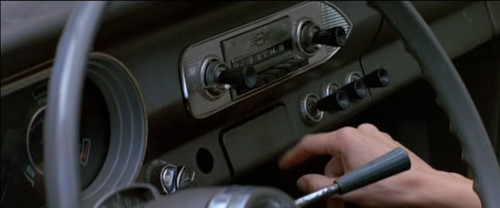
After spending a quiet and uneventful night in the house with Cindy, Carlotta heads off to work feeling refreshed. She is fiddling with the radio dials when her vehicle lurches forward, and proceeds to drive maniacally of its own volition! Shrieking, Carla wrenches the steering wheel, and stomps on the brake, but it’s of no use: she is the proud owner of Josephine, Christine’s half-sister! Narrowly avoiding oncoming traffic (both vehicular and pedestrian), Carla’s highway ordeal finally comes to an end when she wraps Josephine around a telephone pole. She is not physically harmed in the accident, but her eggshell psyche has clearly taken another sharp uppercut.

In the next scene, Carlotta is shown looking beaten, like a victim of spousal abuse, as she awaits psychiatric assessment by Dr. Phil Sniderman (Ron Silver). She recounts the whole of her strange, sordid tale to him, and he plays the typical, patronizing Psychiatrist. She submits to some very “routine,” and very “boring” psychological testing, and returns to her house of horrors by taxi cab. Night has already fallen.


Carla is brutally raped by the unseen entity again that evening. She turns up the next day in Dr. Sniderman’s office presenting the markings of a violent attack, hoping to finally validate her sanity with physical evidence. Sniderman is unmoved. He offers her the consolation that crazy people sometimes do crazy things to their bodies, and also some tranquilizers. He insists that there is something preying upon her from within her mind, not her house, and invites her to join him in a drawn-out, difficult exploration of her past. At this point, Carla feels she hasn’t much choice but to accept his invitation. Sniderman’s colleagues are even less inclined to believe that there is anything strange going on, besides in Carla’s mind.


“She’s masturbating. This entire circus, she’s invented
it to cover up what every little girl does.”
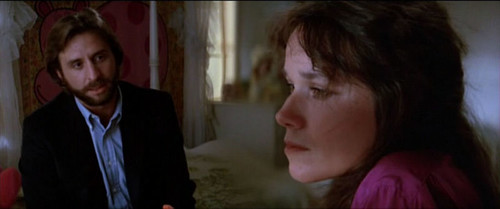


In spite of Carla’s willingness to openly submit to all of Sniderman’s evaluations, the attacks on her body continue. She awakens in the night to find herself in the midst of an orgasm while invisible hands tenderly fondle her. Carla once again seeks refuge at her friend Cindy’s apartment. To her immense relief, Cindy and George witness their house being torn apart by the unseen demon that has been terrorizing Carla. The next day, she and Cindy set out to do some important shopping at their Friendly Neighbourhood Occult Book Section, and Carla meets a couple of nerdy parapsychology students there by happenstance. She brings them back to her house for an investigation.

Just when the parageeks are about to recommend Carla seek psychiatric help, and leave her to her crazy delusions, an unsettling tremor shakes the kitchen where they all stand. Carla feels ever so vilified when they decide to set up shop for the night, adorning her bedroom with a complex array of scientific gadgetry. Somewhere in the darkness of the early morning hours, Carla and the scientists are awakened by an electrical disturbance. At last, the entity that has been tormenting Carla has been captured on film! The parageeks cream in their pocket protectors.


“The entity” appears weakened somehow by the presence of the scientists, and the young family is finally able to get some respite under the watchful eyes of the cameras. Things almost seem to be returning to normal when Carla’s boyfriend, Jerry (Alex Rocco), returns home from an extended business trip. She does her best to explain away the presence of the scientists, but Jerry doesn’t seem to place much stock in what she tells him, until he follows her into the bedroom for a game of Hide the Weiner. To his dumbfounded amazement, she is already lying on the bed, playing it with some invisible d00d! Jerry lashes out in futility, busting a wooden chair over the phantom rapists’ back, rendering poor Carla unconscious in the process.

She is taken immediately to the hospital. Desperate times call for desperate measures. She agrees to a dangerous experiment, designed to physically capture the powerful force of her unseen attacker.


“I’ve always believed that there were several planes of
existence, distinct, and separate, and we as human beings
inhabit only one.”


Led by Dr. Elizabeth Cooley (Jacqueline Brookes), the parageeks build a replica of Carla’s home within a controlled setting. The intention is to freeze the bastard entity in liquid helium, using Carla as a decoy. She is assured her perfect and complete safety, in the form of a double-paned, triple-ultra-mega heat-sealed something-or-other glass “protection area.”

Sniderman is, of course, seething with rage when he learns about what those parapsych charlatans have cooked up for his patient. His beautiful, fractured, helpless, sensuous patient… Methinks the bearded headshrinker hath fallen in love with Mrs. Moran! He makes it his personal mission to interfere with Dr. Cooley’s work, and seeks the counsel of his mentor, Dr. Weber (George Coe). Together, they try to put a stop to Cooley’s “potentially lethal” experiment, but it’s of no use. The environmental simulation proceeds, and Carla Moran is left to dwell in her laboratory home, while dozens of anxious onlookers observe her every movement.

Finally, the entity comes for her…


Something is wrong: the hi-tech super computers start going haywire, and the massive liquid helium zapper gun comes to life on its own above Carla. The bastard entity is trying to kill her! Carla darts frantically from room to room as the contraption fires off round after round of deadly helium mere inches from her lovely face. The “protective area” the scientists constructed for her shatters under the force of a good blast. Carla must face her demon alone. Bravely, she confronts that which torments her. All look on in horror as the helium tanks erupt.

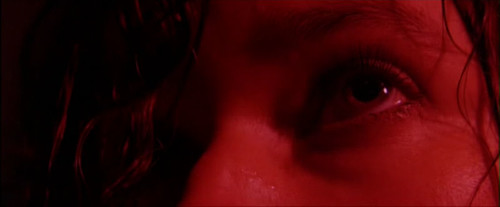

Sniderman swings in heroically, like a mighty Tarzan moving gracefully on a vine, and rescues Carla in the proverbial nick of time. Glancing back at the ruptured habitat, they stare wide-eyed at the hulking, incredible mass which has been frozen in its tracks. The physical manifestation of the entity is witnessed by dozens of astonished scientists before the giant ice block shatters, and an ominous-looking mist washes over Carla and Dr. Sniderman.

Carla returns home, to the place that she has come to fear so intensely. It seems much less sinister in the daylight, as is the case with most haunted places. She moves with trepidation from room to room, as though waiting for the thing to announce its continued presence in her life.

The front door slams shut. A low, unearthly voice groans: “Cunt.”


The Entity, directed by Sidney J. Furie (Iron Eagle, Superman 4), is a reasonable adaptation of Frank De Felitta’s chilling novel of the same title. In the tradition of The Exorcist, The Entity’s screenplay is stripped of much of the psychobabble found within the novel. Both William Friedken, and Sidney J. Furie, in their directorial wisdom, coax the viewer into identifying with the victims’ version of events, rather than with the scientific theories presented. The psychiatrists are seen as cold, unfeeling clinicians in their attempts to help Carlotta, while the team of parapsychologists are presented as heroic, perhaps even angelic beings. The intense, deeply-personal explorations of Carla’s troubled psyche remain, for the most part, confined to the pages of De Felitta’s novel, while “the entity” is left to wreak havoc on the screen, unhindered by psychoanalytical mumbo jumbo.

The novel also features a more detailed, intimate account of the twisted courtship that took place between Carla Moran and the entity, which literally chilled my flesh as I tore hungrily through the chapters.
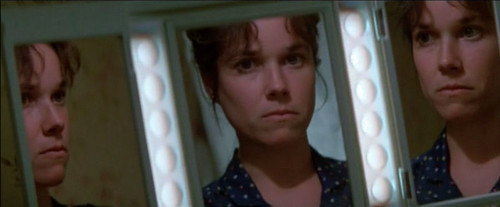


All the players do a commendable job in keeping the tension factor up, while maintaining a remarkably low level of overall cornography. The victims in this film are easy to relate to; especially Barbara Hershey’s taut, convincing portrayal of a desperate, young woman hunted nightly by a vicious attacker she cannot see. In addition to her formidable talent as an actress, the classic lines of her striking, nude body are not to be overlooked, as the leading lady is overpowered by invisible hands in various stages of undress.

A solid, supernatural thriller!! Hideo Nakata is apparently slated to re-make, and re-release the film in 2010. Lord of Horror, please deliver us from CGI titty-grabbing!



4/5 Kitty Skulls = Video Cocaine!


* Those who watch closely will recognize Natasha Ryan (who played Carla’s daughter, Julie) as Amy, the little girl who was taunted by the pig-faced apparition “Jody” in The Amityville Horror.

Wednesday, September 17, 2008

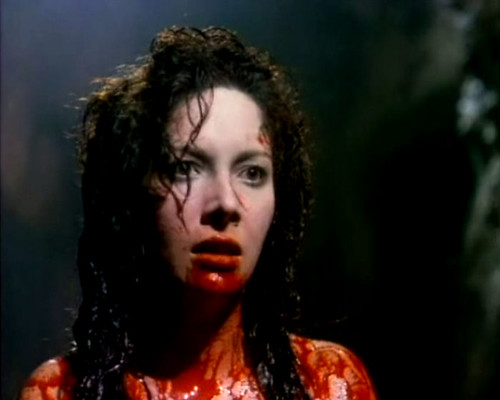
Alucarda (1978)


Caution: Spoilers Galore


A beautiful, young woman (Tina Romero) has just given birth to a daughter in a most desolate place. She hands the infant to a straw-covered old goat of a woman, instructing her to protect the child, “and don’t let him take her away.” The Goat Woman whisks the child off, leaving the young woman alone and frightened. The structure begins to echo with disembodied growls and unholy groans, while the young woman grimaces in terror. Methinks the little girl’s Daddy might have some friends in low places…

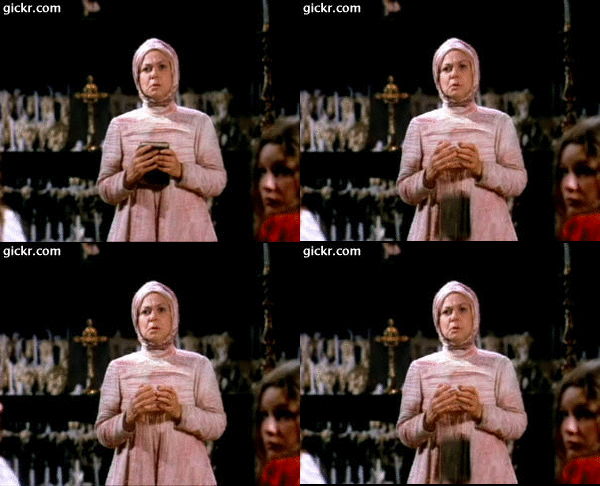
The child is taken to a convent to be raised by a strange order of nuns, who wear habits made of soiled feminine hygiene products. Alucarda (Tina Romero), who is shown now a young woman, finds a kindred spirit in Justine (Susana Kamini), who is taken in by the convent after the death of her parents. The beautiful, soft-featured Justine stands in bold contrast against her pale, raven-haired new friend. Be-frocked in heavy, head-to-toe black, Alucarda’s behaviour is unabashed. She takes Justine out into the woods to show her the many “secrets” she has discovered there.


The two girls encounter a barnyard oddity (somebody, at some point, loved a goat out in those woods and spawned a whole new kind of ugly) who is eager to show them his collection of protective amulets. Justine is frightened of the gamey woodland peddler (Claudio Brook), and rightly so. Alucarda, on the other hand, is intrigued by the gypsy’s talk of fortune and alchemy.


“I see your dream clearly, your past and future.
You have come from the dew in the forest, and
there they will be waiting for you.
Strange creatures, they are,
and you must take care.”


Alucarda flees, in tears, with Justine following behind her. They come upon what appears to be an old church, which the Tampon Torture Nuns have graciously decorated in gore-soaked bed sheets. Alucarda feels she knows the place, somehow, although she is certain she has never been there before. She brazenly decides to look inside. The bosom friends are entering into a crypt.


“Are you afraid of dying?
I mean, dying loving each other.
Dying together, so we may live as one
forever, with the same blood always flowing
through our veins. Darling, darling Justine…
I live in you...Would you die for me?”


Just as the girls prepare to enter into a solemn death pact, Alucarda unwittingly opens her own mother’s coffin, and in doing so, releases a terrifying cacophony of unholy voices which torment her mind. Alucarda herself lapses into delirium, while poor Justine looks on in horror. Just before our raven-haired Hellcat begins pulling out her hair in large, bloody chunks, the girls are able to break the spell of paralyzing terror that the haunted place has cast upon them, and flee to the sanctity of the convent. But the “voices from the past” haunt them, still. The girls sense that something has travelled back with them; a dark malevolence perceptibly casting its shadow over their union.



Justine collapses during a particularly fire-and-brimstone-filled sermon at Our Lady of the Tampon Torture Nuns. When Alucarda is charged with the responsibility of watching over her delicate friend, the girls speak openly about their shared sense of impending doom. After but a few moments alone with Justine, Alucarda is in fits again. This time, she seems to have developed a rather intense distaste for Jesus Jewelry.

Alucarda seems quite possessed; omitting sounds which only dogs can hear, along with others which are both audible and extremely uncomfortable to humans. Calling out the names of the fallen angel, she suddenly a starring role in a rather intriguing, ritualistic tableau: Justine lies limp and helpless against a wall, as the Gypsy Goat Man (when did he get here?) dry humps her. Alucarda is propelled backward by the awesome force of her 70’s beaver, achieving top-notch contortion while continuing to wail in a demonic language.


Gypsy Goat Man strips Justine of her clothes, and binds her to Alucarda by hands and blood. In spirit, the girls are led into the woods to become the sensuous centerpiece in a bona fide Witches’ Sabbat, complete with raucous orgy touched by the hands of the Horned God himself!


As Justine and Alucarda become more entrenched in their erotic woodland adventures, the most benign of the Tampon Torture Nuns, Sister Anjelica (Tina French), works herself into a bloody, bombastic Jesus frenzy on the girls’ behalf, beseeching her Saviour to protect them from harm. A lightning bolt of Righteous Revenge strikes and kills the High Priestess, thus ending the unholy ritual, and Sister Anjelica takes a well-deserved moonwalk across a beam of heavenly light in celebration.

But the demonic merry-go-round hasn’t stopped spinning yet! During Daily Scripture Drill, Justine and Alucarda are caught snickering in the back of class. When confronted by Sister Germana, they erupt into anti-Christian philosophy. Oh, my!


“And this is what the Devil does:
he grants us virtues to expand his Kingdom,
the only valid one. God, with his lack of knowledge,
does not understand this truth, and opposes it
with false thoughts and prayers…
Satan, Satan, Satan! Our Lord and Master!”


Sister Germana (Adriana Roel) urges the girls to repent, but poor, confused Justine merely flops around, speechless, while Alucarda hovers in the darkness, stoic in her evil vows. The Sisters order them to prepare for Confession at once, although Justine barely looks like she’ll hold out until dinner time. Stricken with what is presumably the physical manifestation of her allegiance with the Devil, she quickly slips into her deathbed, and pulls up the covers.

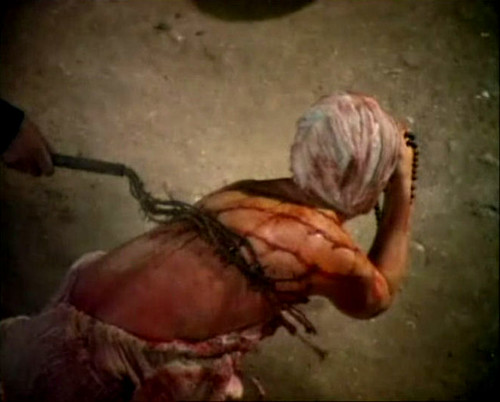
Alucarda’s confession doesn’t go very well. After spewing even more anti-Christian philosophy, our dark heroine makes a sexual advance on Father Lazaro (David Silva) and is ordered banished from the convent. Father Lazaro and the Tampon Torture Nuns retire to the Whipping Lounge to unwind after a long day spent dealing with demonic little girls. They must save their strength for the Exorcism!


Sister Anjelica arrives with Dr. Oszek (Claudio Brook) to inject some reality into the torrid scene of nuns rolling around on the floor in ecstasy, and teenage girls strung up on crosses, their clothes torn off and their blood spilled.


“This is not an act of faith!
This is the most primitive expression of ignorance
I have ever seen! You have just killed Justine!”


Dr. Oszek takes Alucarda away to the safety of his own abode, where his blind, trusting daughter Daniela is primed and waiting for the Devil Girl’s seductive charms. When she first awakens in the strange, new environment, Alucarda reacts like a caged animal. There is something horribly familiar about the Doctor, no matter what he says to try to calm her. But once the helpless, innocent Daniela begins exploring Alucarda’s face with her soft fingertips, Devil Girl is enraptured again.

Back at Our Lady of the Tampon Torture Nuns, the Satanic shit continues to hit the fan! Dr. Oszek is called back to help after Justine’s body is discovered missing. When the carcass of one of the Tampon Torture Nuns is found charred, as though by “the fires of Hell,” Father Lazaro takes matters into his own, sanctimonious hands, and dismembers her remains with the Lord’s Sword.


“She was dead, but the Forces of Evil
had not abandoned her!”


Even Dr. Oszek is convinced now; it must be the work of the Devil! The Devil, working through the still-possessed, undead body of Justine! And what’s worse, Alucarda, probably still-possessed as well, and most definitely still alive, is back home – alone – with poor Daniela! Sweet Christ!

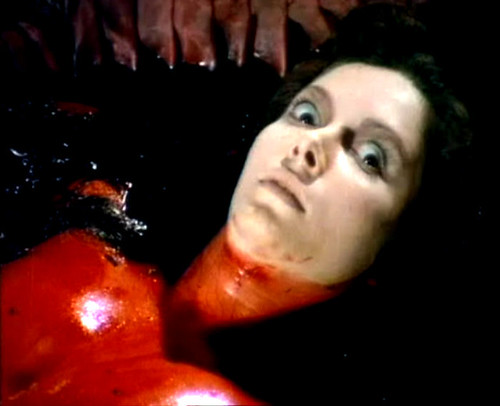
The house is deserted. Alucarda has gone back to the only home she has ever known: the convent. Sister Anjelica takes Dr. Oszek to the crypt deep in the woods, where Justine’s body lay marinating in a coffin full of blood. She springs from her resting place, slashing at Sister Anjelica with all the fury of Hell. The persistent Sister makes one last plea for Justine’s immortal soul, and at last, innocence and purity flickers once again in the girls’ eyes… Until Oszek and his gang of Priests come rushing in to ruin the tender moment by dousing it with Holy Water.


In her final, searing moments, Justine lunges at Sister Anjelica, tearing her throat out, before collapsing dramatically to the floor, leaving little more than a charred mound of un-undead flesh behind. The crusaders must now seek out and destroy the Devil Girl, by means of Exorcism. They find Alucarda in the convent proper, setting nuns on fire with the fully-realized force of her Devil-given powers. At her side is Daniela, frightened and defenseless. Alas, Alucarda’s special brand of scary love brings about the undue suffering of yet another innocent playmate. As the blind girl tumbles down the staircase, Alucarda’s face is marked briefly with remorse, followed immediately with even more Hellfire.


The tattered, old hide of Sister Anjelica is erected during a crucial moment in Alucarda’s fiery Exorcism. Held Christ-like in the face of the raving Devil Girl, it acts as the Ultimate Weapon against the Forces of Evil living deep within the child. Alucarda howls ferociously, and pulls her hair some more for old times’ sake, but God’s Army hath expunged the Devil Girl… While the convent and a sizeable portion of its inhabitants burns, so it was a win-win situation.


ALUCARDA is an absolute dream to watch, time and again. The artistry is as rich and vivid as the underlying themes of religious oppression, sexual repression, and love’s innocence. Every frame of Juan López Moctezuma’s masterpiece is exquisitely shot, staged, dressed, and lit, by a brilliant team of artists led by Kleomenes Stamatiades. The musical score, composed by Anthony Guefen, provides all the necessary dramatic nuances without overpowering the breathtaking imagery.

Tina Romero is phenomenal in the title role, with a face so expressive that she actually seems to communicate her character better during non-speaking scenes. Romero’s portrayal of Alucarda as a lost orphan searching for a sense of belonging is as believable as her portrayal of the shrieking Devil Girl with the hypnotic eyes. Always filmed in sharp contrast against Alucarda, Justine’s character balances Alucarda’s insolence with soft, virginal beauty. Susana Kamini’s delicate features and demure mannerisms endear her to the role of Justine, the perfect companion for Alucarda in her harrowing journey of self-exploration.

So, run – don’t walk – to the woodland clearing filled with writhing Satanists nearest you!!!


My Life with the Thrill Kill Kult


5/5 Kitty Skulls = Pick of the litter!

Thursday, July 10, 2008

Karla (2006)


Caution: Spoilers Galore

This film, directed by Joel Bender, was released amid a considerable amount of opposition from the Canadian public, especially those who had been somehow touched by the brutal crimes of Paul Bernardo and his wife, Karla Homolka, either by relation, geography, or a profound sense of compassion for their young victims. Society in general seems to be comfortable enough with the idea of violent films, just so long as the facts and details don't "glorify" the real thing.

Karla was released nationwide, though it was not shown in the areas where the crimes had actually occurred, out of respect for the victims and their families. I can recall a fair amount of debate about whether or not it was appropriate to see a film (and thus support its creators financially) about such tragic, and unfortunately real events. I watched the movie out of sheer curiosity, having followed the story as many other Canadians did at the time; after all, it was a sensational case, and the media was eating it all up, in spite of a Canada-wide publication ban until legal proceedings had ceased.


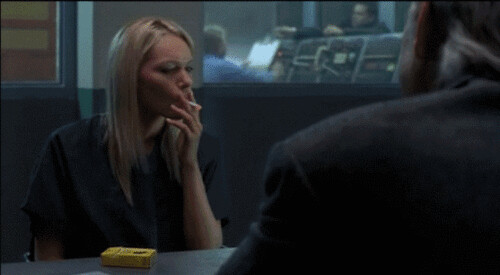
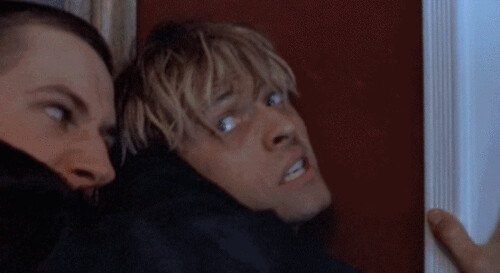
The film opens with a narrated letter to Karla (Laura Prepon) from her psychiatrist, Dr. Arnold (Patrick Bauchau). Having served 8 years of her 12 year prison sentence for her part in the abduction and murder of Tina McCarthy and Kaitlyn Ross*, she will soon be eligible for parole, pending an extensive evaluation of her current mental state. Surrounded by the imposing atmosphere of the prison, the two make small talk as though they are old friends meeting over coffee. Karla informs her doctor that she has recently obtained her degree (in Psychology, from Queen's University in Kingston, Ontario) via correspondence, and he commends her on this accomplishment before directing their conversation down darker avenues. He presents her with a photo album full of pictures of her ex-husband, Paul Bernardo (Misha Collins), and she begins to tell him how they came to fall in love.


Paul and Karla meet at a hotel bar while she is attending a pet care convention on behalf of the pet store she works for. Hours after they meet, she brings him up to her room for a night of wild sex, while their friends look on uncomfortably. Soon after that night, Karla brings him back to her parents house for even more sex, and produces a set of handcuffs for Paul to place on her.


"What if I were a rapist?" he asks her, after binding her arms and pushing her down on the bed. "That'd be cool," she replies, her voice a sultry whisper. The film ends with a white-washed, lazy zoom in on Karla's face. She is staring straight ahead, eyes blank, while her voice provides a narrative in which she bluntly states that she is not a psychopath.

If I didn't know anything about the actual case of Paul Bernardo and Karla Homolka, I would probably say that this was a satisfactory movie. It was reasonably well-filmed, adequately-paced, and decently-acted. The material was violent, and at times even downright disturbing. The film definitely had a low-budget feel to it, like a made-for-TV movie, but in spite of that, I still found myself on the edge of my seat a number of times as I watched it. Also, I must admit that I was anxious to see what That 70's Girl would do with such a meaty role as that of Killer Karla.


While I must give credit to Laura Prepon for successfully swabbing her 70's show character from my brain while I was engaged in this picture, I don't think she was the right choice for this role. Physically speaking, Homolka and Prepon look nothing alike: Prepon being tall with an athletic build, while Homolka stood much shorter in stature and was by most accounts rather "diminuitive" looking. Homolka was also much more of a girly-girl than Prepon, who at times seems almost masculine to me, with her husky voice and deadpan delivery.

Moreover, both of the young women who played the victims of the gruesome twosome, Kristin Honey and Sarah Foret, outshone all the other players in this film by far. The two girls did an extremely good job making such utterly agonizing situations appear real enough for the viewer so as to gain their sympathy. Sarah Foret stood out a little further in her role, her star shining even more brightly, perhaps due in part to the fact that her character had more time with the Bernardo's on-screen, as well as in reality.


Misha Collins was acceptable in the role of Paul Bernardo. I had a hard time believing him as a serial rapist-slash-murderer, but that was part of Bernardo's thing in the first place: the fact that nobody could believe that such a "normal," even charming man could do such terrible things. He was the boy next door! Collins' role was clearly secondary to that of Ms. Prepon, and really didn't factor all that heavily into the overall feel of the film. The movie is named after Karla, after all.

Given that I do know a considerable amount about the case (due mostly to Stephen Williams' book Invisible Darkness), I found it absolutely appalling that the filmmakers decided to portray Homolka in the same manner in which the Canadian justice system had: as an unwilling participant in her husband's heinous crimes, after having been verbally, psychologically, and physically abused into submission. In spite of mountainous evidence to the contrary, Karla Homolka has been victimized as much in this film as in the courts and media. Clearly, I was very disappointed. Clearly, I was expecting a fresh (and perhaps more accurate) point of view.


2/5 Kitty Skulls = This movie should have been aborted in the first trimester.


*******************
ENDNOTES
*******************

* Substituted for the names of the teenage victims. The name of Karla's psychiatrist, Dr. Arnold has also been changed.